
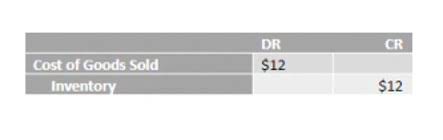
Cost of sales represented the highest cost on the income statement at $26,600,000,000. The second highest cost on the income statement—selling and general and administrative expenses—totaled $22,800,000,000. These expenses are period costs, meaning they must be assets = liabilities + equity expensed in the period in which they are incurred. Examples of marketing and selling costs include advertising costs, order taking costs and salaries of sales persons etc.
Nonmanufacturing Costs at PepsiCo

Controllable costs – refer to costs that can be influenced or controlled by the manager. Segment managers should be evaluated based on costs that they can control. Sunk costs – historical costs that will not make any difference in making a decision.
Direct labor:
Nonmanufacturing costs represent the necessary expenditures required to operate a business that do not directly involve the physical transformation of raw materials into a finished good. These costs are distinct from product costs, which include direct materials, direct labor, and manufacturing overhead applied in a factory setting. They form part of inventory and are charged against revenue, i.e. cost of sales, only when sold.
Terms compared staff
- Indirect labor (part of manufacturing overhead) includes the production supervisors who oversee production for several different boats and product lines.
- Even though nonmanufacturing overhead costs are not product costs according to GAAP, these expenses (along with product costs and profit) must be covered by the selling prices of a company’s products.
- Now, add the value of existing inventory to the cost of purchasing new inventory to calculate the cost of direct materials.
- Usually financial statements refer to the balance sheet, income statement, statement of comprehensive income, statement of cash flows, and statement of stockholders’ equity.
The next step is to calculate the costs of utilities (electricity, water, or gas) that are directly used in the manufacturing process (for example, fuel used to operate the production equipment). Table 2.3.1 provides several examples of manufacturing costs at Custom Furniture Company by category. The balance sheet reports information as of a date (a point in time). The income statement, statement of cash flows, statement of comprehensive income, and the statement of stockholders’ equity report information for a period of time (or time interval) such as a year, quarter, or month. Usually financial statements refer to the balance sheet, income statement, statement of comprehensive income, statement of cash flows, and statement of stockholders’ equity. Insurance Expense, Wages Expense, Advertising nonmanufacturing costs include Expense, Interest Expense are expenses matched with the period of time in the heading of the income statement.
Direct materials are raw materials that become an integral part of the finished goods. A primary component is sales compensation, which includes base salaries for sales management and variable commission structures for field representatives. Understanding this distinction is fundamental for accurate product pricing, financial reporting, and compliance with Generally Accepted Accounting Principles (GAAP). The overall health of a commercial entity relies heavily on efficiently managing these operational expenses, which support the entire value chain from executive oversight to final product delivery. Standard cost – predetermined cost based on some reasonable basis such as past experiences, budgeted amounts, industry standards, etc.
Production Costs: What They Are and How to Calculate Them
Examples of nonmanufacturing costs appear in Figure 1.5 “Examples of Nonmanufacturing Costs at Custom Furniture Company”. To help clarify which costs are included in these three categories, let’s look at a furniture company that specializes in building custom wood tables called Custom https://www.bookstime.com/ Furniture Company. Each table is unique and built to customer specifications for use in homes (coffee tables and dining room tables) and offices (boardroom and meeting room tables). The sales price of each table varies significantly, from $1,000 to more than $30,000. Costs that are not related to the production of goods are called nonmanufacturing costs23; they are also referred to as period costs24.

Examples include direct materials, direct labor, and sales commission based on sales. Indirect costs – those that cannot be traced to a particular object of costing. Indirect costs include factory overhead and operating costs that benefit more than one product, department, or branch. For instance, Ford Motor Company has reduced the price of F-150 Lightning, its electric car, by $10,000.
Optimize your workforce, take control of inefficiencies, and watch your profits soar with team time tracking software. That’s why you need a reliable partner to buddy up with and slash your costs. In case you’re spending too many resources on a task or project, the option to set budgets in Clockify will give you a detailed insight into how you can better balance those resources. To obtain these details, you can refer to the company’s employment records that has a list of all the employees and their hourly rates. If the net realizable value of the inventory is less than the actual cost of the inventory, it is often necessary to reduce the inventory amount.
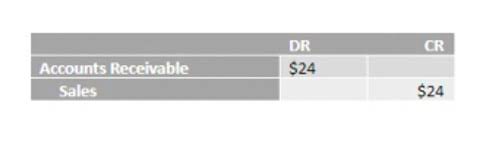
These include selling expenses (such as advertising costs, delivery expense, salaries and commission of salesmen) and administrative expenses (such as salaries of executives and legal expenses). Manufacturing costs – incurred in the factory to convert raw materials into finished goods. It includes cost of raw materials used (direct materials), direct labor, and factory overhead. The key aspect of nonmanufacturing costs is their mandated accounting treatment as period costs. This designation contrasts with manufacturing costs, which are treated as product costs and are capitalized to the inventory asset account on the balance sheet. On the other hand, a product with a low gross profit may actually be very profitable, if it uses only a minimal amount of administrative and selling expense.